
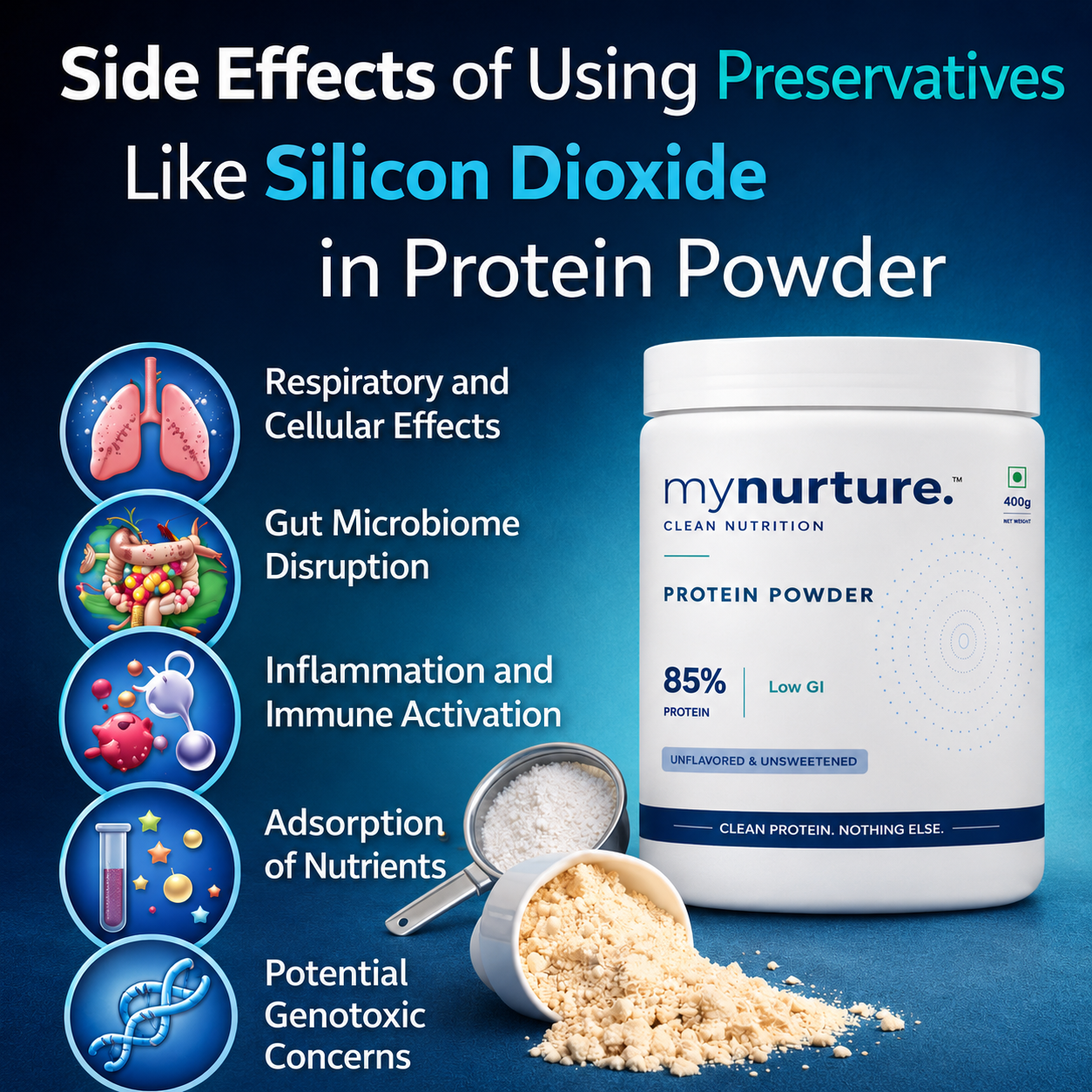
Side Effects of Using Preservatives Like Silicon Dioxide in Protein Powder
Protein powders are widely used for fitness, weight management, and clinical nutrition. To improve texture, clumping resistance, and shelf stability, manufacturers often add preservatives and anticaking agents — one of the most common being silicon dioxide.
While silicon dioxide is approved for use in foods and supplements, growing scientific evidence suggests that long-term, repeated exposure — especially from daily protein powder use — may have biological effects worth understanding.
What Is Silicon Dioxide?
Silicon dioxide is a fine, powdered form of silica derived from sand. In protein and supplement manufacturing, it is used as an anticaking agent to prevent clumping, a flow agent to improve powder handling, and a stabilizer to improve texture and uniformity.
Because it is virtually tasteless and invisible, it is widely assumed to be inert. However, research shows that its effects, particularly at nanoscale particles, may not be entirely neutral.
1. Potential Respiratory and Cellular Effects
The most documented concerns around silicon dioxide arise from inhalation exposure and small particle sizes. Although food-grade silicon dioxide is amorphous and generally considered safer than crystalline silica, studies on nanoscale particles suggest potential cellular interactions that warrant further examination.
2. Impact on Gut Microbiome and Digestion
Emerging research indicates that silicon dioxide particles — especially at nano sizes — may influence gut bacterial balance and intestinal health. Experimental studies have found that nanosilica particles can cross intestinal barriers in animal models, may alter gut microbiota composition, and prolonged exposure can contribute to gut immune responses and low-grade inflammatory signaling.
3. Inflammation and Immune System Activation
Some studies report that nanoscale silicon dioxide can stimulate immune cells and increase inflammatory markers in laboratory and animal studies. This may be due to activation of macrophages, enhanced production of free radicals, and release of pro-inflammatory cytokines.
Chronic low-grade inflammation is associated with metabolic disorders, tissue stress, and immune dysfunction, especially with long-term exposure.
4. Adsorption of Nutrients
Silicon dioxide has a high surface area, meaning it can adsorb other molecules. In food and supplement matrices, this might interfere with digestion of proteins, bind to vitamins and minerals reducing absorption, and affect the bioavailability of nutrients.
5. Potential Genotoxic Concerns
While standard food-grade silica is not classified as genotoxic by regulatory agencies, some experimental studies of nanosilica particles have shown DNA strand breaks, oxidative stress at high doses, and cellular stress responses.
These effects were typically seen at concentrations higher than typical dietary exposure, but they highlight the need for further long-term studies.
Regulatory Safety vs. Daily Supplement Exposure
Regulatory agencies classify silicon dioxide as generally recognized as safe when used within specified limits. However, such assessments focus on short-term safety data and do not always account for cumulative daily use over years.
Why This Matters for Protein Powder Users
Protein supplements are often used daily, multiple times per day, over months to years. Regular intake of additives like silicon dioxide — even in small amounts — means cumulative exposure is real. Potential implications include subtle gut microbiome changes, low-grade inflammation, altered immune responses, and nutrient absorption interference.
How to Minimize Risk
If you want to reduce unnecessary preservative exposure, choose protein powders with no or minimal preservatives, transparent short ingredient lists, and natural anticaking agents. Rotate products and prefer whole-food nutrition where possible.
Final Takeaway
Silicon dioxide is widely used as an anticaking agent in protein powders and generally considered safe within regulatory limits. However, scientific evidence suggests that long-term, repeated exposure — particularly to nanoscale particles — may have biological effects on the gut, immune system, and cellular health.
While occasional intake is unlikely to cause harm, minimizing unnecessary preservatives and choosing cleaner, more natural protein powders aligns with long-term wellness goals.